3.5 hrsIntermediate
Akhara Immersion Walk
A guided pre-dawn entry into a Shaiva camp, including dhuni darshan and a private satsang.
Request availability→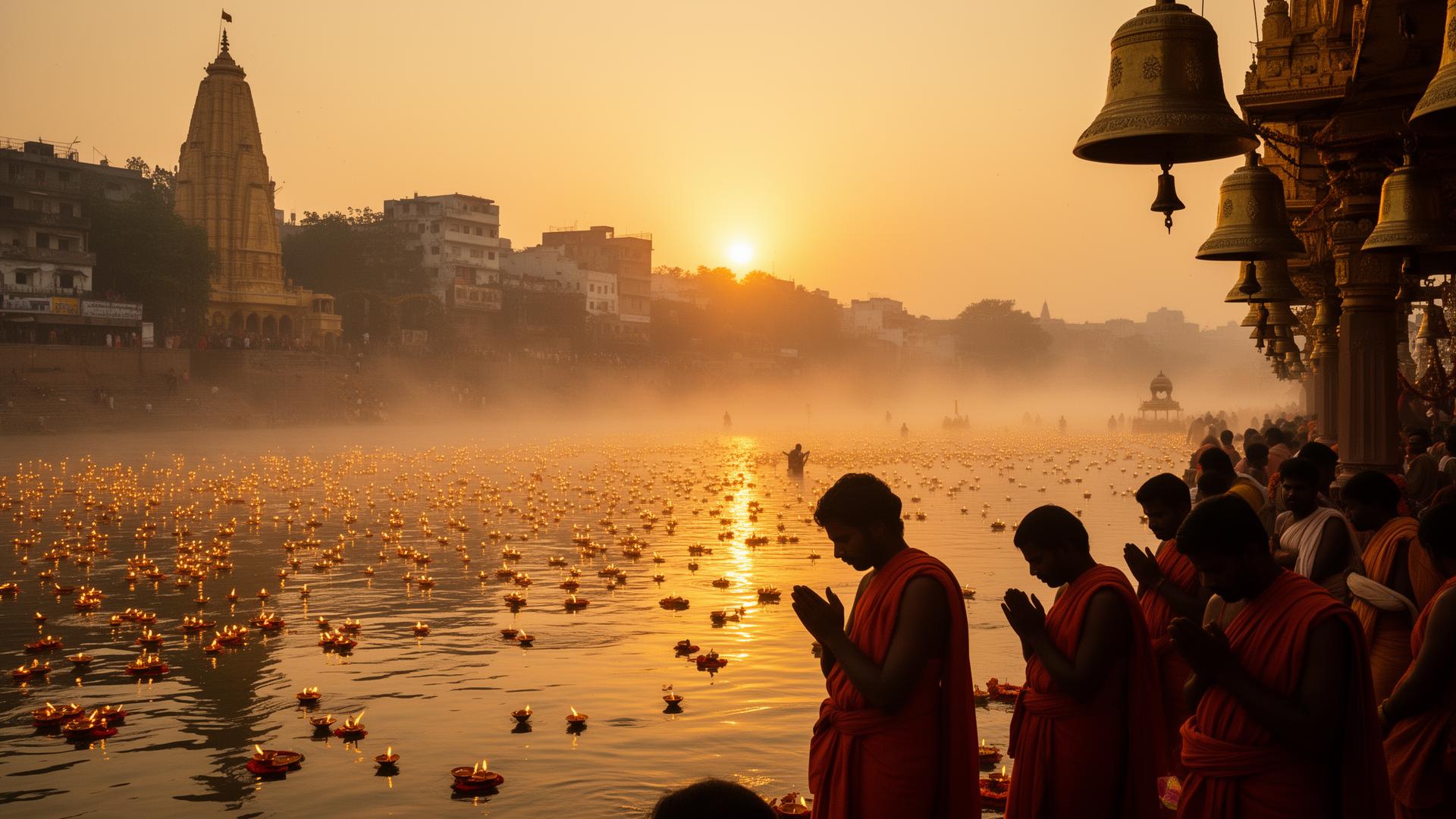
Walk ancient paths. Sit with sages by the sacred fire. Meditate beside the Godavari at dawn. Witness a city of faith awaken on the banks of Ram Kund.
Where rivers and rishis meet
Every twelve years, when Jupiter enters Leo and the Sun aligns with the constellations sacred to Trimbakeshwar, the Kumbh descends upon Nashik. It is not a festival — it is a cosmic appointment kept by sages, seekers and seas of pilgrims for over two millennia.
The Godavari, born from Shiva’s matted locks at Brahmagiri, becomes the axis of an awakening city. Ghats turn into altars. Akharas march at dawn. And for fifty-five luminous days, Nashik becomes the spiritual capital of the world.
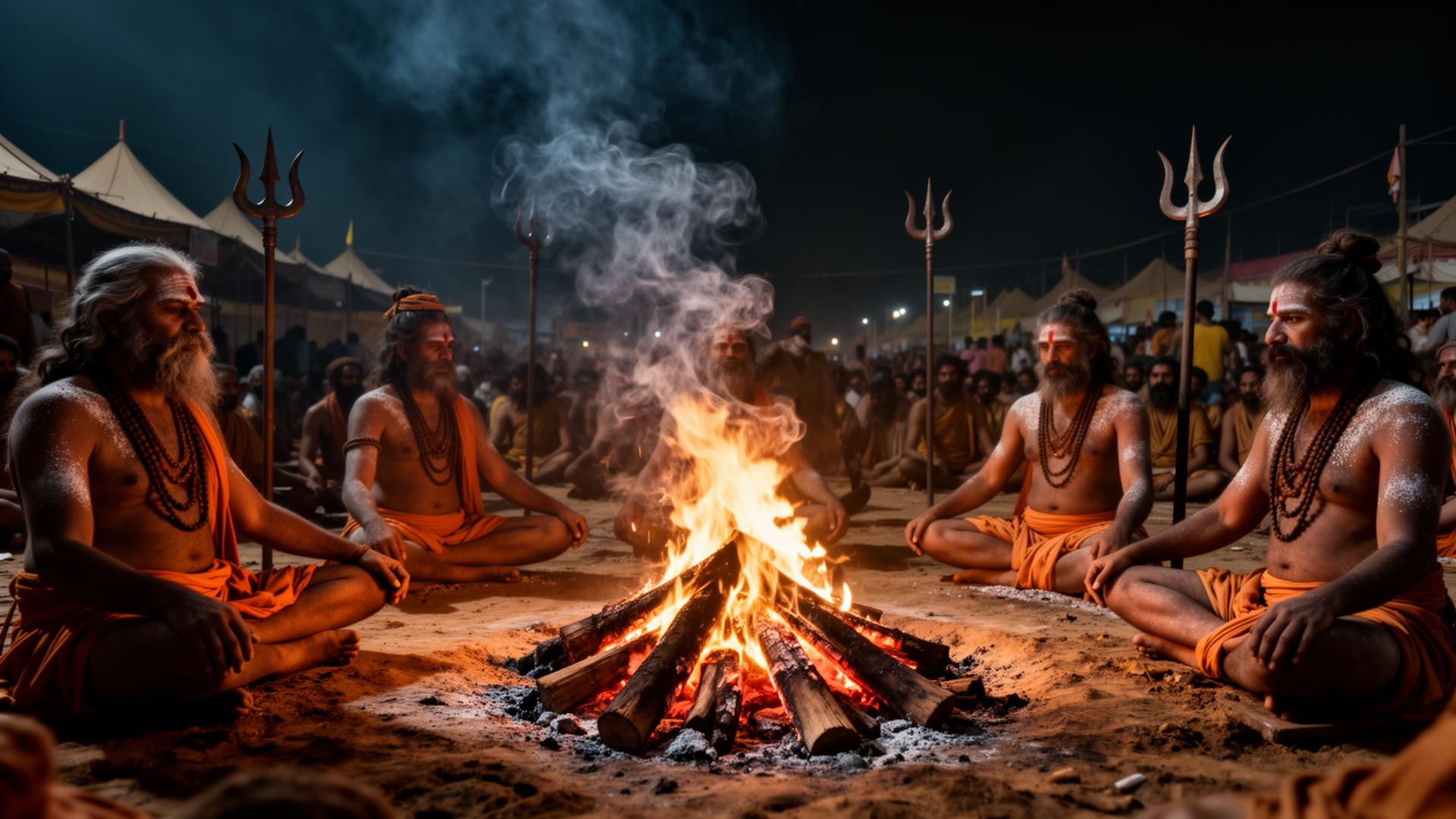
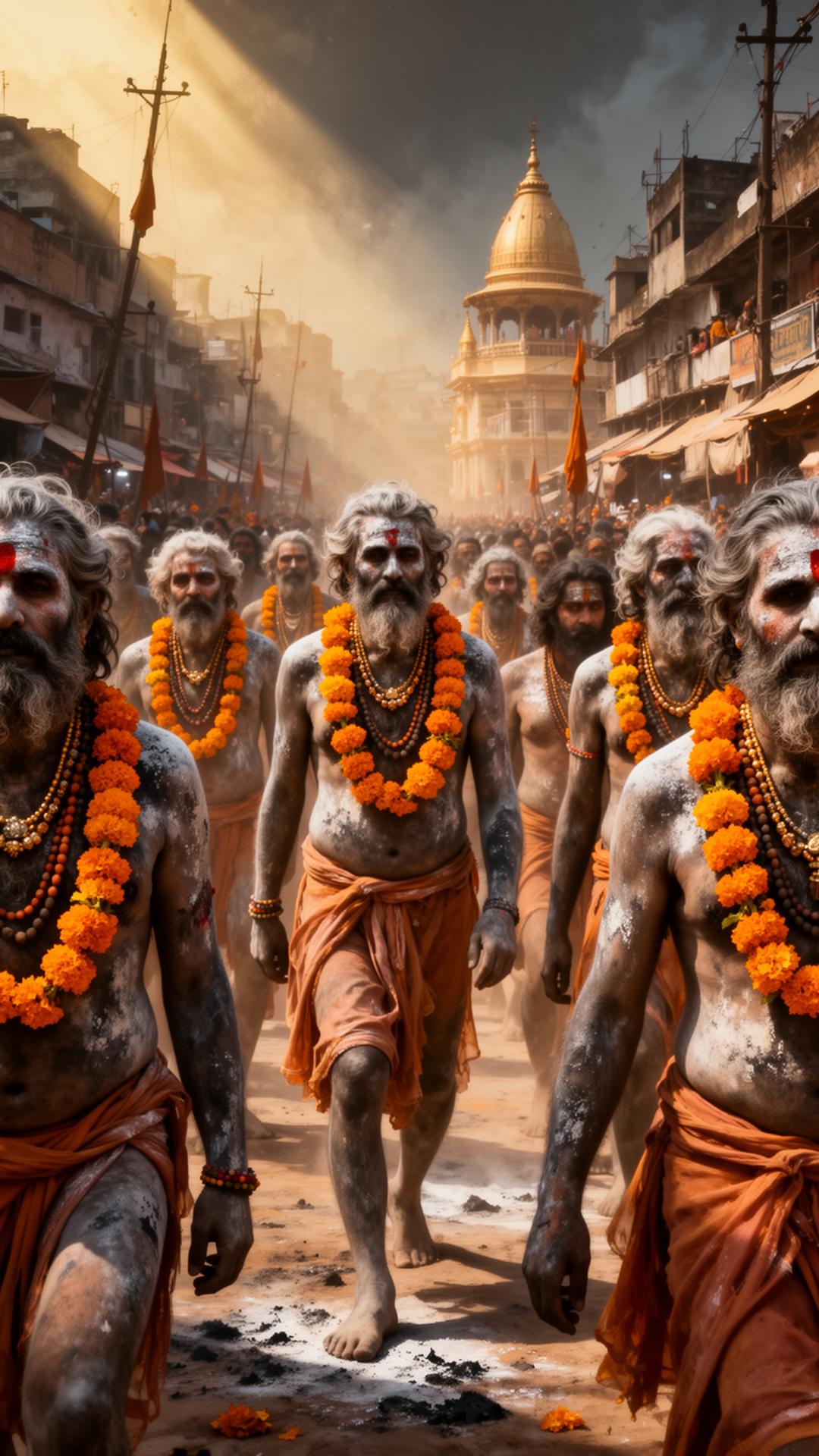
An Akhara is far more than a monastic camp. These are ancient orders — part martial, part mystical — that have safeguarded the Sanatan tradition for over a thousand years. At the Nashik Kumbh, the Shaiva Akharas (devotees of Shiva, including the ash-smeared Naga Sadhus) and the Vaishnava Akharas (devotees of Vishnu, the orange-robed Bairagis) raise their sacred standards along the Godavari and open their gates to seekers.
Juna, Niranjani, Mahanirvani and Atal — the storied orders of Shiva. You will find Naga Sadhus seated motionless beside dhunis that have not been extinguished for decades, the air heavy with chillum smoke and Sanskrit chants.
The Nirmohi, Digambar and Nirvani Anis — disciples of Rama and Krishna. Their camps echo with bhajans, kirtans and the soft tinkle of tulsi malas as devotees turn beads through the night.
“Do not come with questions. Come with silence. The fire will answer.”
30 km from Nashik · One of twelve Jyotirlingas
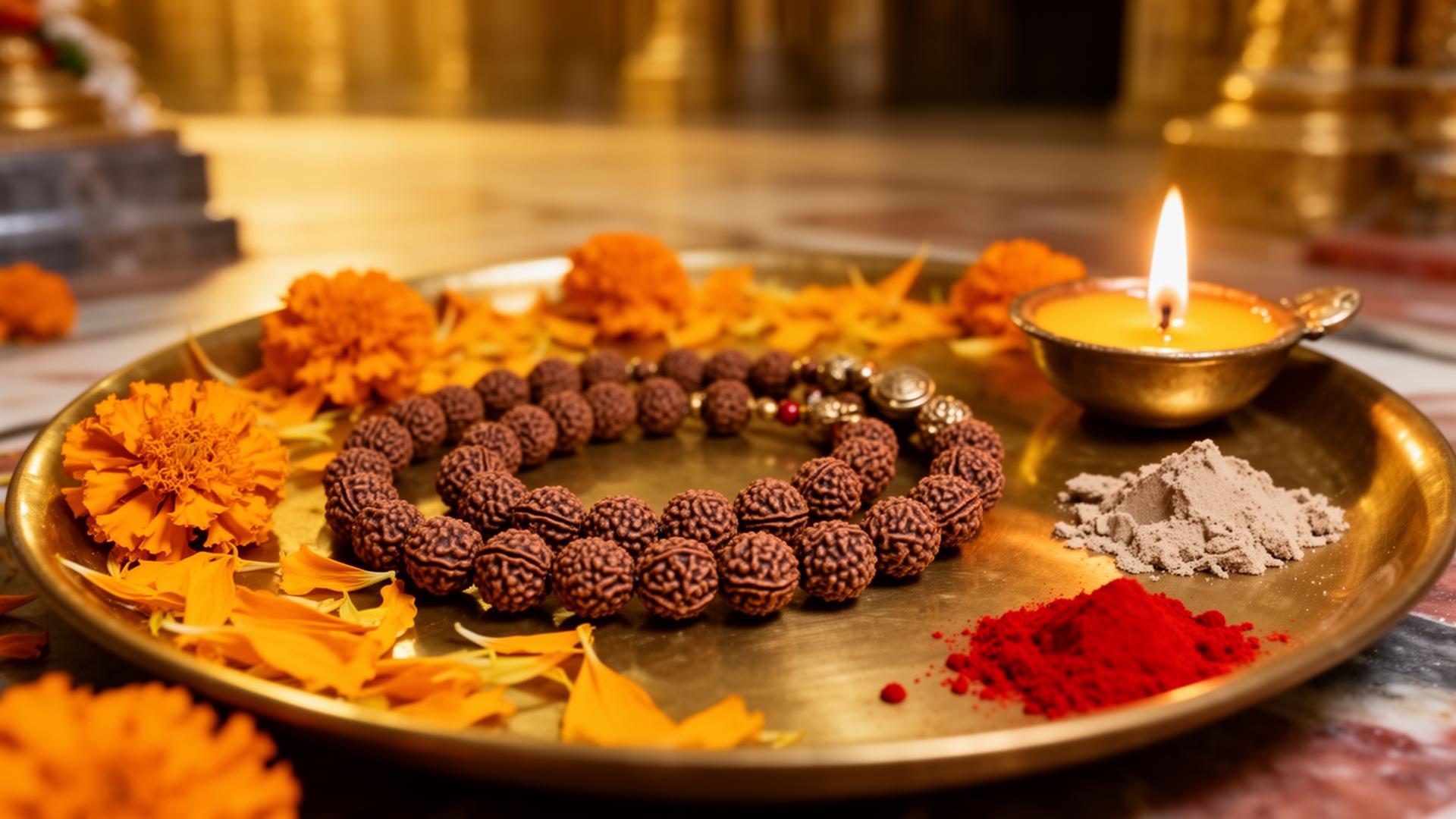
Legend holds that the Rudraksha bead fell from the eyes of Lord Shiva as he wept for the suffering of the world. To wear one is to wear a fragment of his compassion. At Trimbakeshwar, where the three-faced Jyotirlinga represents Brahma, Vishnu and Shiva together, that bead is awakened by a lineage of Vedic Brahmins whose mantras have been carried unbroken for generations.
During Kumbh, the cosmic geometry that draws sages to the Godavari also multiplies the potency of every abhishekam performed here. Pilgrims who receive an energised mala during these fifty-five days speak of a quietening that lasts for years.
A solemn intention is set before the priest, naming your gotra and prayer.
The bead is bathed in milk, honey, curd, ghee and Ganga jal.
108 recitations of the death-conquering mantra of Lord Shiva.
Life-force is invoked into the Rudraksha through Vedic mantras.
The energised mala is worn against the heart — yours to carry home.
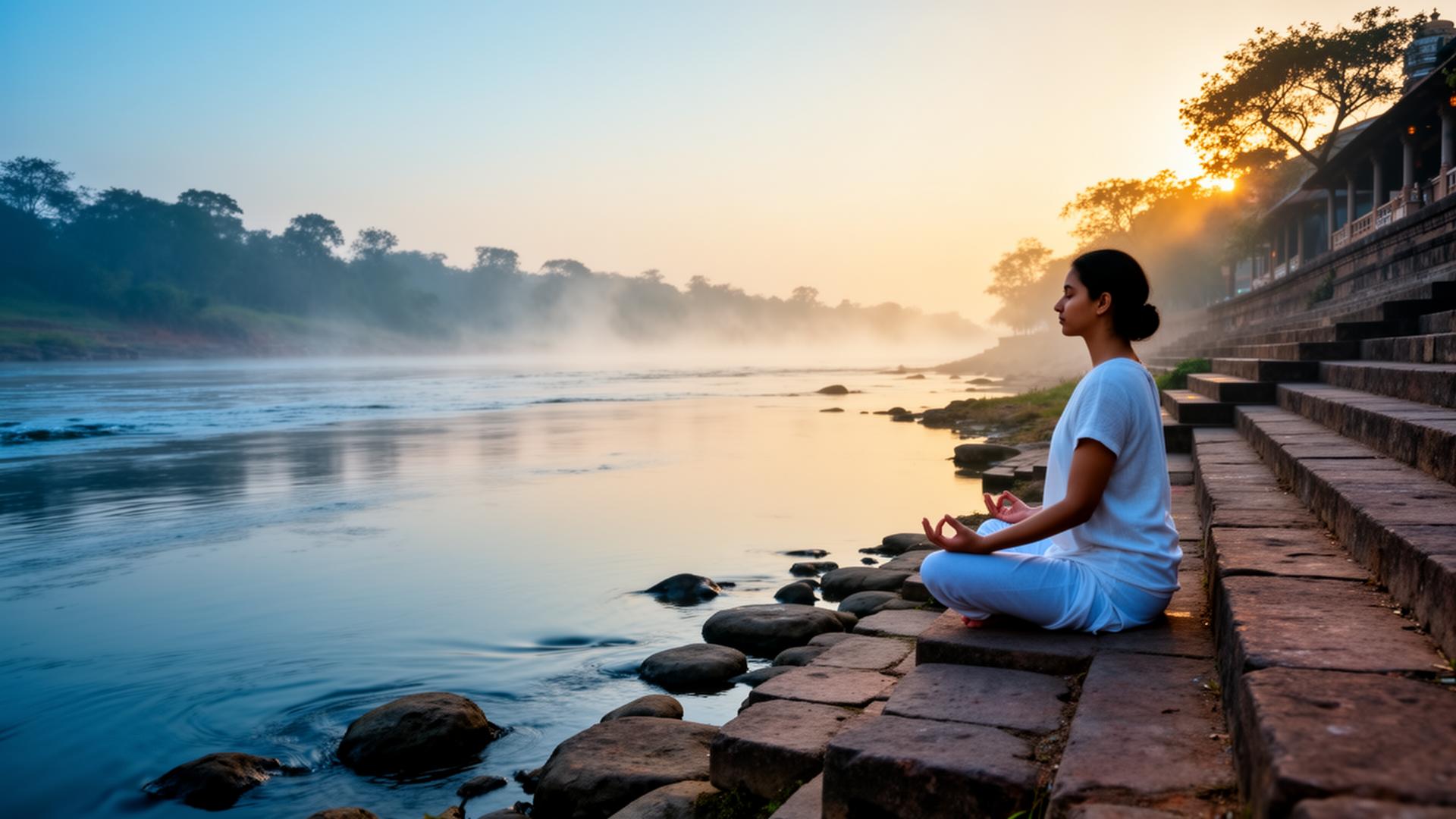
Away from the crescendoing crowds of the central ghats, the upstream banks of the Godavari hold a different magic. Here, our Vedic facilitators guide small circles of seekers through pranayama, silent dhyana and a gentle sankalpa ritual — feet in cool river-stone, breath synchronising with current.
Alternate-nostril breathing as the sky lightens.
Symbolic submersion releases ancestral patterns.
Theta-wave stillness without a single instrument.
Set an intention the river will carry downstream.
“When the river becomes silent, the soul begins to speak.”
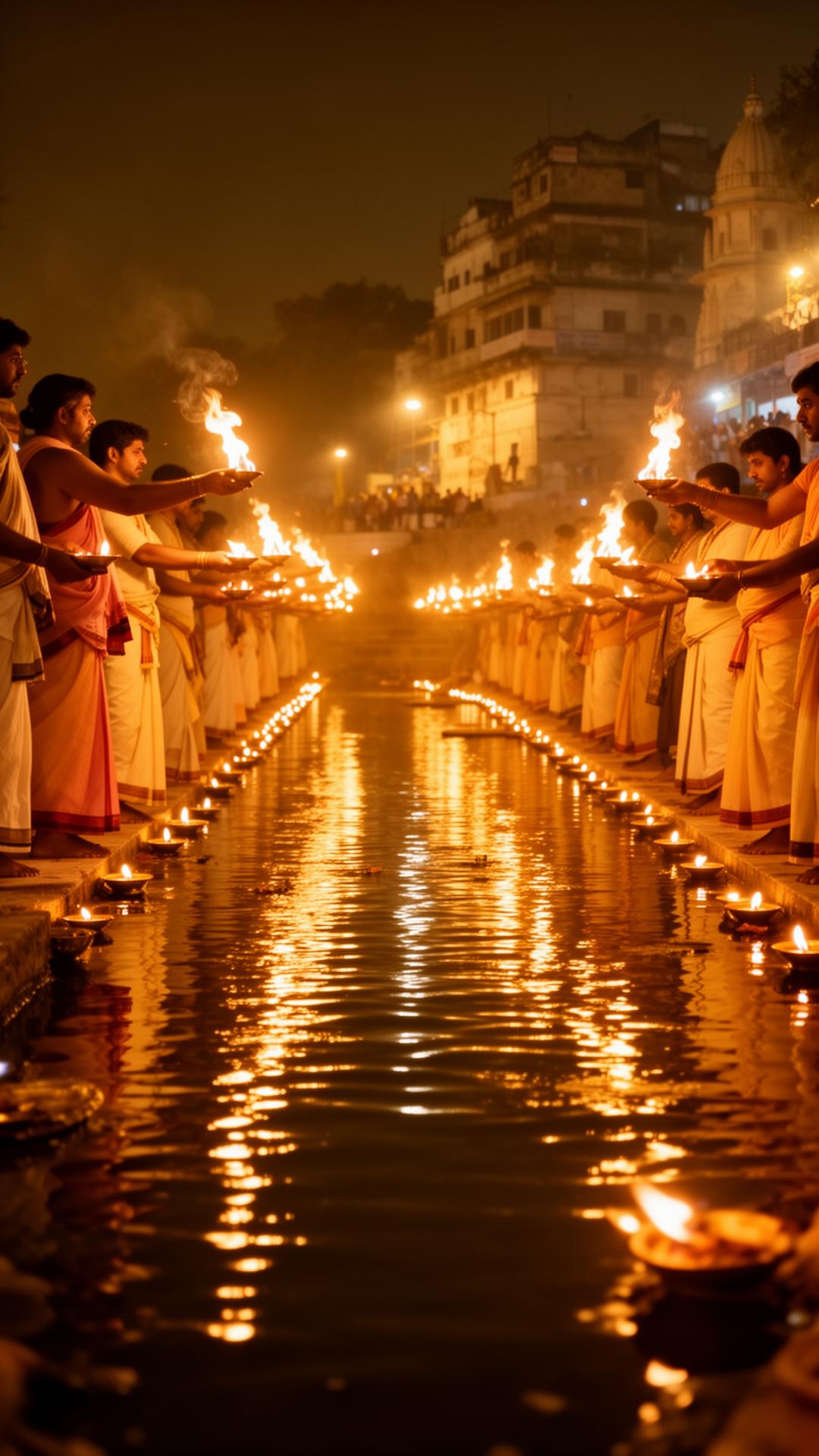
The first bell rings before the first bird. Brass lamps the size of shields are lifted in perfect synchrony. A hundred priests, robed in ochre, begin a chant that has greeted this exact patch of river for two thousand years. The sky bleeds from indigo to pink to liquid gold, and the Godavari catches every flame on her back.
Then come the diyas — thousands of them. Tiny earthen cups bearing a single flame, set adrift by trembling fingers. They gather in slow constellations on the water’s skin, mirroring a sky that has not yet finished waking up. For a single, suspended moment, you cannot tell where prayer ends and dawn begins.
Beats the swell and secures a clear east-facing view.
The upper steps of Ramkund Ghat or the Gadge Maharaj bridge.
Buy a pattal-leaf diya from temple vendors; light from the priest’s flame.
1/60s, ISO 800 hand-held. Lower lenses — the magic is at water-level.
Hand-curated with trusted local hosts, lineage priests and small groups — so the sacred remains sacred.
A guided pre-dawn entry into a Shaiva camp, including dhuni darshan and a private satsang.
Request availability→Private abhishekam at Trimbakeshwar with a lineage Vedic Brahmin and an energised mala to carry home.
Request availability→Small-group pranayama and silent dhyana on a quiet upstream ghat at Brahma Muhurta.
Request availability→Reserved viewing tier at Ram Kund, priest-led floating-diya ritual and a private blessing.
Request availability→A full day across Kushavarta, Trimbakeshwar, Panchavati and Ram Kund with an English-speaking guide.
Request availability→Register your interest, download our spiritual planning guide, or speak with one of our pilgrimage hosts. The first Shahi Snan of Nashik Kumbh 2027 will not wait.