01
One of twelve
A cosmic pillar in the sacred geography of Shiva.
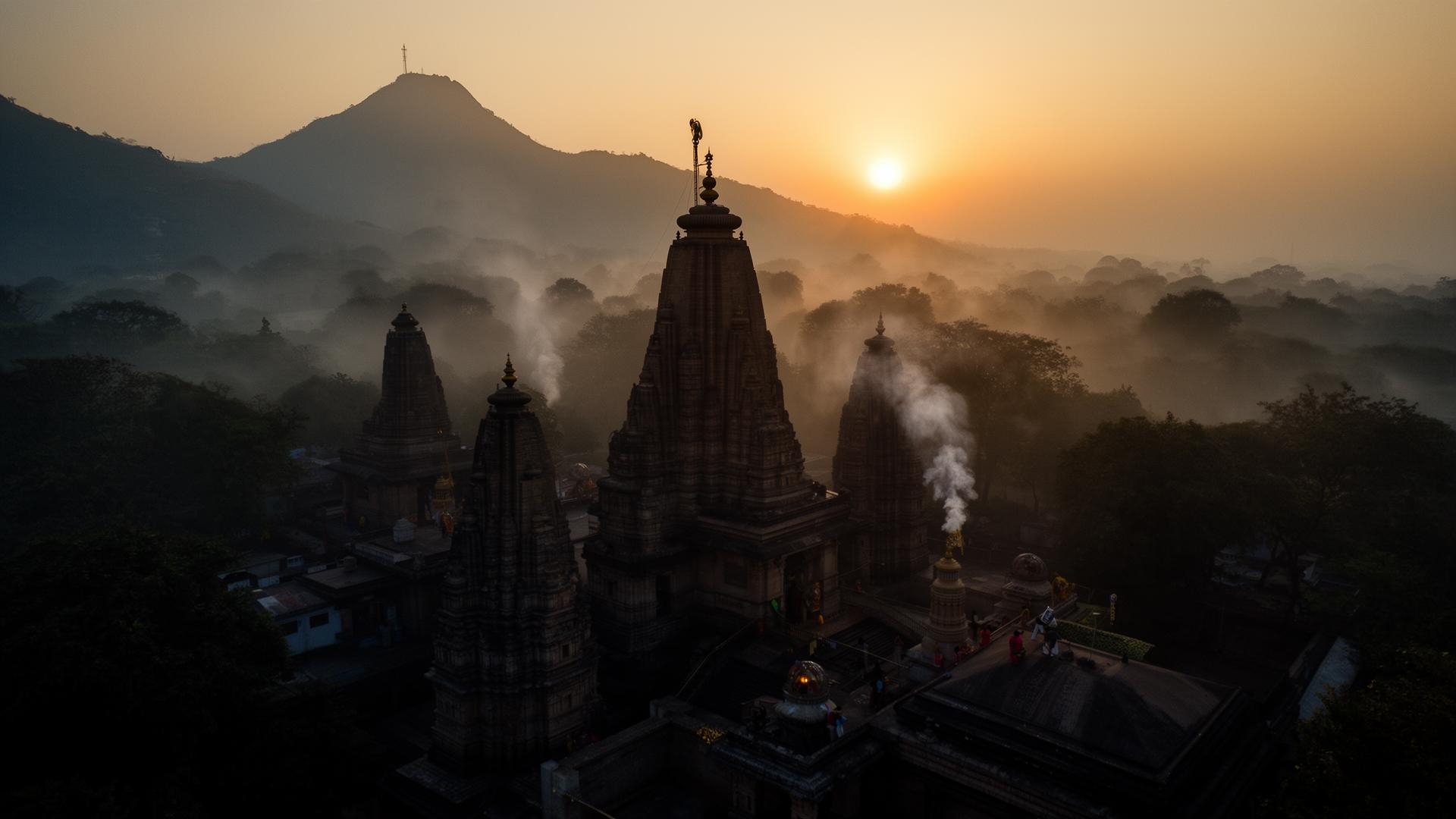
One of the twelve sacred Jyotirlingas. The origin of the Godavari river. A timeless spiritual destination for seekers across the world.
Among the twelve Jyotirlingas — the cosmic pillars of light where Shiva is said to have manifested himself — Trimbakeshwar holds a singular place. The lingam here is three-faced, embodying Brahma, Vishnu and Shiva, a rare trinity rooted in the volcanic basalt of the Sahyadris.
For seekers, the temple is not a monument. It is a living current — a place where chant, smoke and silence have braided together for over two thousand years.
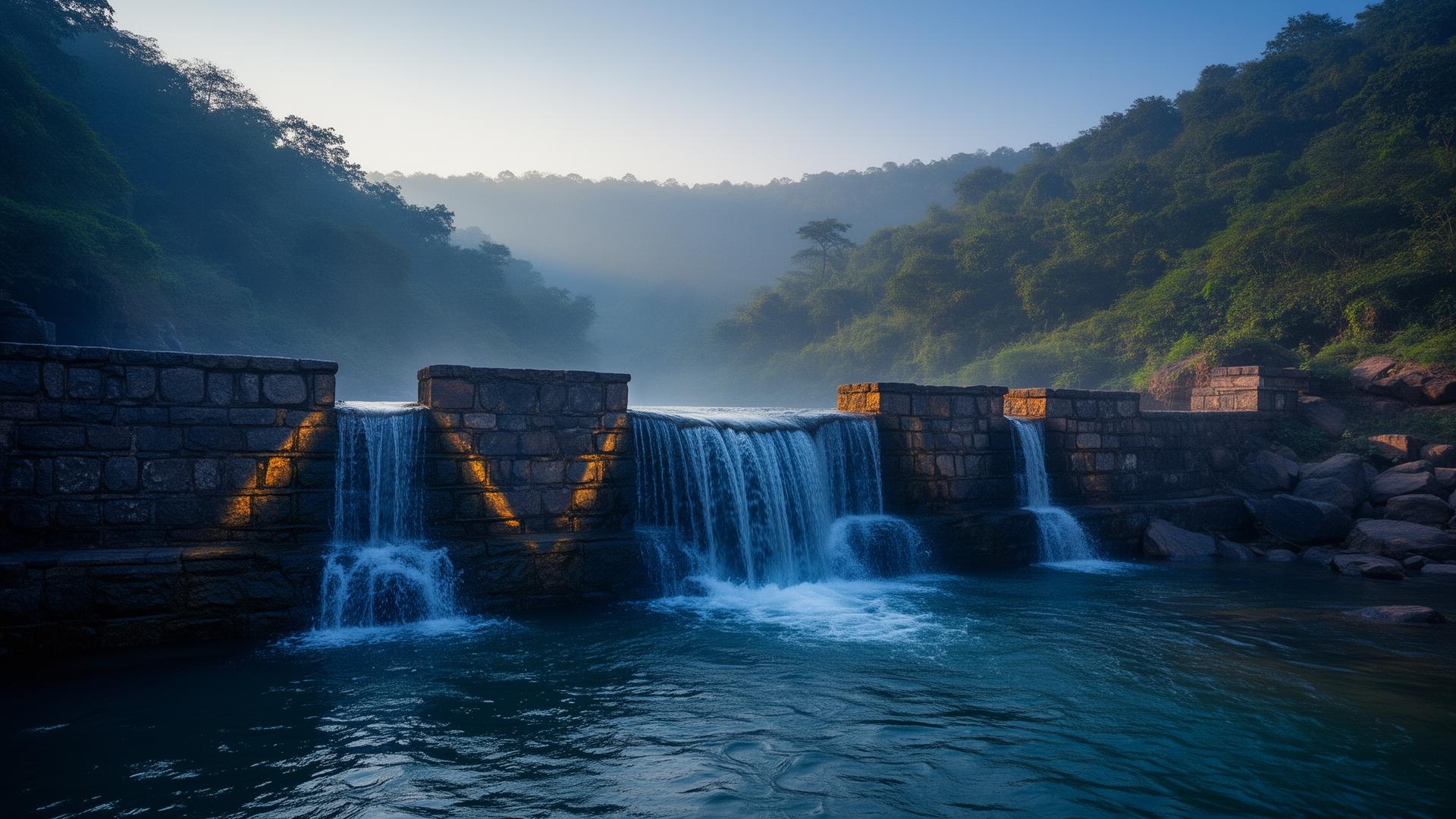
High on the slopes of Brahmagiri, the Godavari is born from rock — a thin silver thread that becomes the lifeline of southern India. Pilgrims trace it from this whispered origin down to Kushavarta, where it gathers into a sacred kund.
To bathe at Trimbakeshwar during Kumbh is to step into the river at her purest moment — before she becomes a river at all.
A 1,295 m sacred mountain held as Shiva's matted hair.
Drops gathered from stone — the Ganga of the south.
Where the river surfaces fully as the sacred kund.
Every Shahi Snan at Nashik begins from her current.
Plan your visit by the rhythm of the temple. Each hour carries a different energy — peaceful, ritual, or grand.
The temple wakes with bells, smoke and the first lamp of the day.
Soft morning light fills the inner sanctum and outer courtyard.
Recommended for first-time and international visitors.
The deity is offered bhog; a brief closure for inner sanctum.
Pilgrim flow peaks; allow extra time in queues.
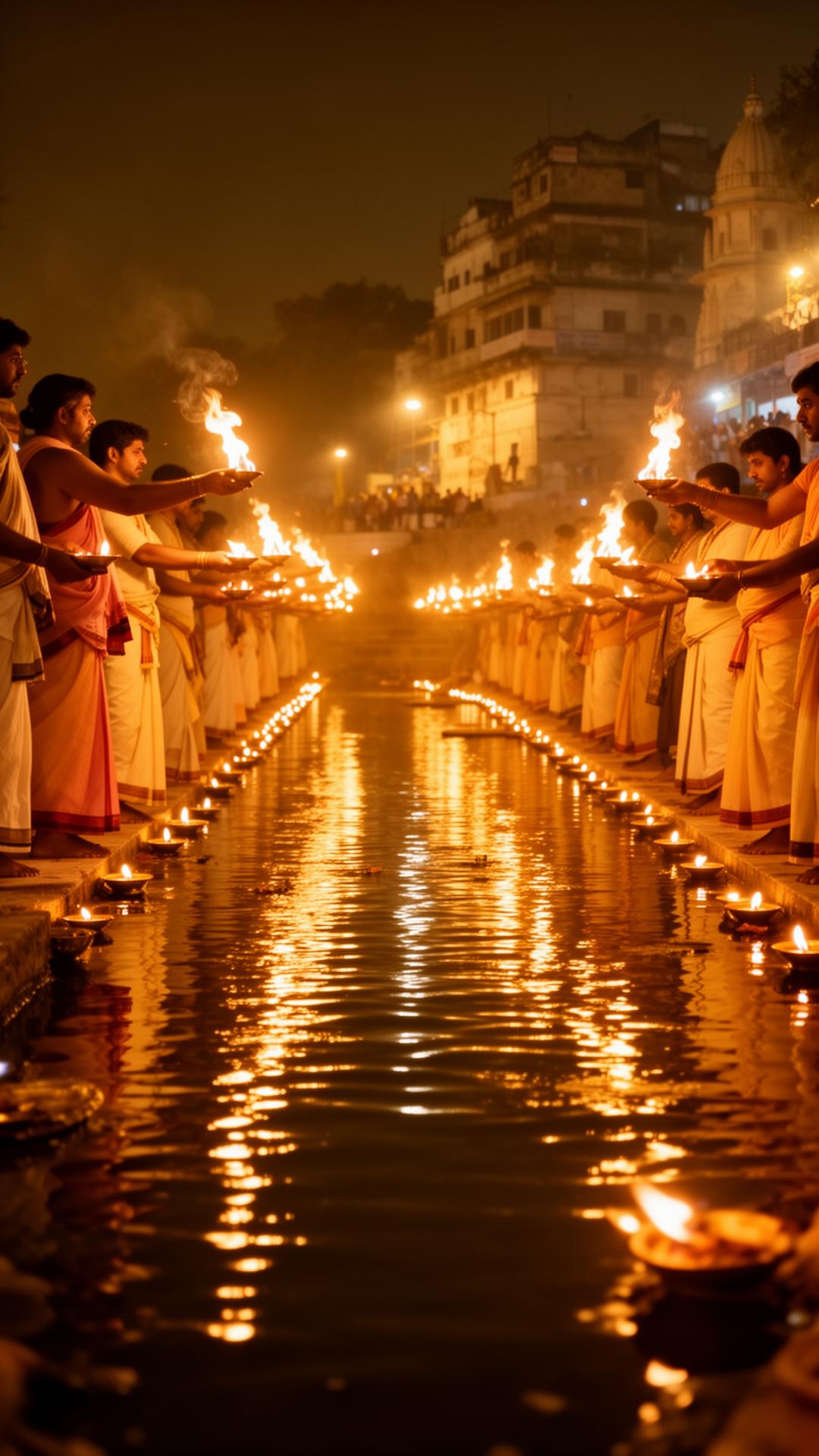
Lamps, conches and chant fill the courtyard at dusk.
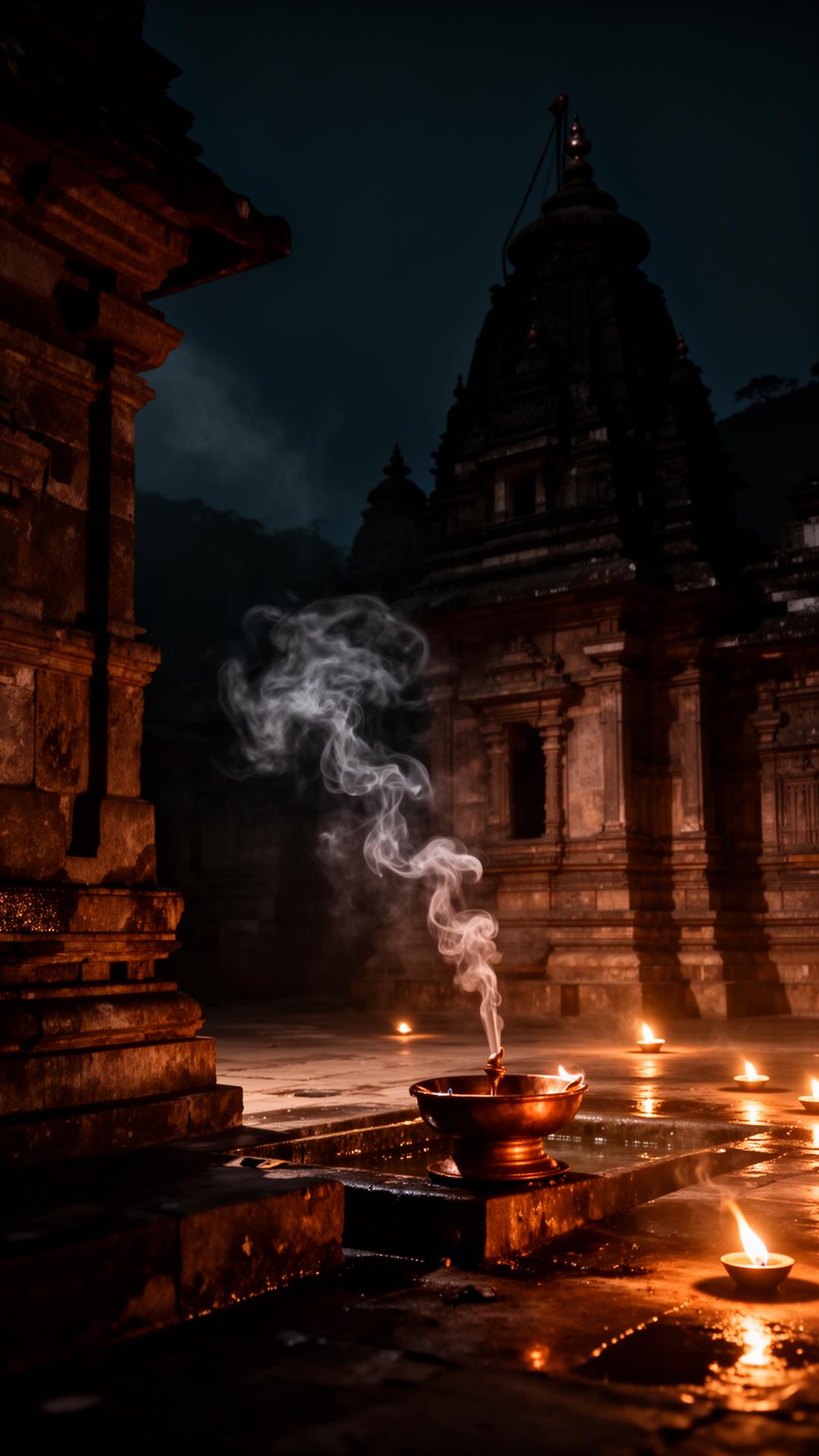
The temple is gently put to rest under deep night sky.
Trimbakeshwar is one of the very few sacred sites in India where these ancient rituals are conducted, drawing devotees from across the world.
A three-day rite addressing ancestral remembrance and serpent dosha. Performed only here, under priestly guidance.
A specialised ritual believed to ease the influence of Kalsarpa dosha in a person's astrological chart.
A reverent rite for ancestors across three generations, performed beside the temple complex.
The sacred abhishek of the three-faced lingam with water, milk and chant.
These rituals are deeply personal. Book through registered priests at the temple administration, plan one or three days, and arrive with quiet intent.
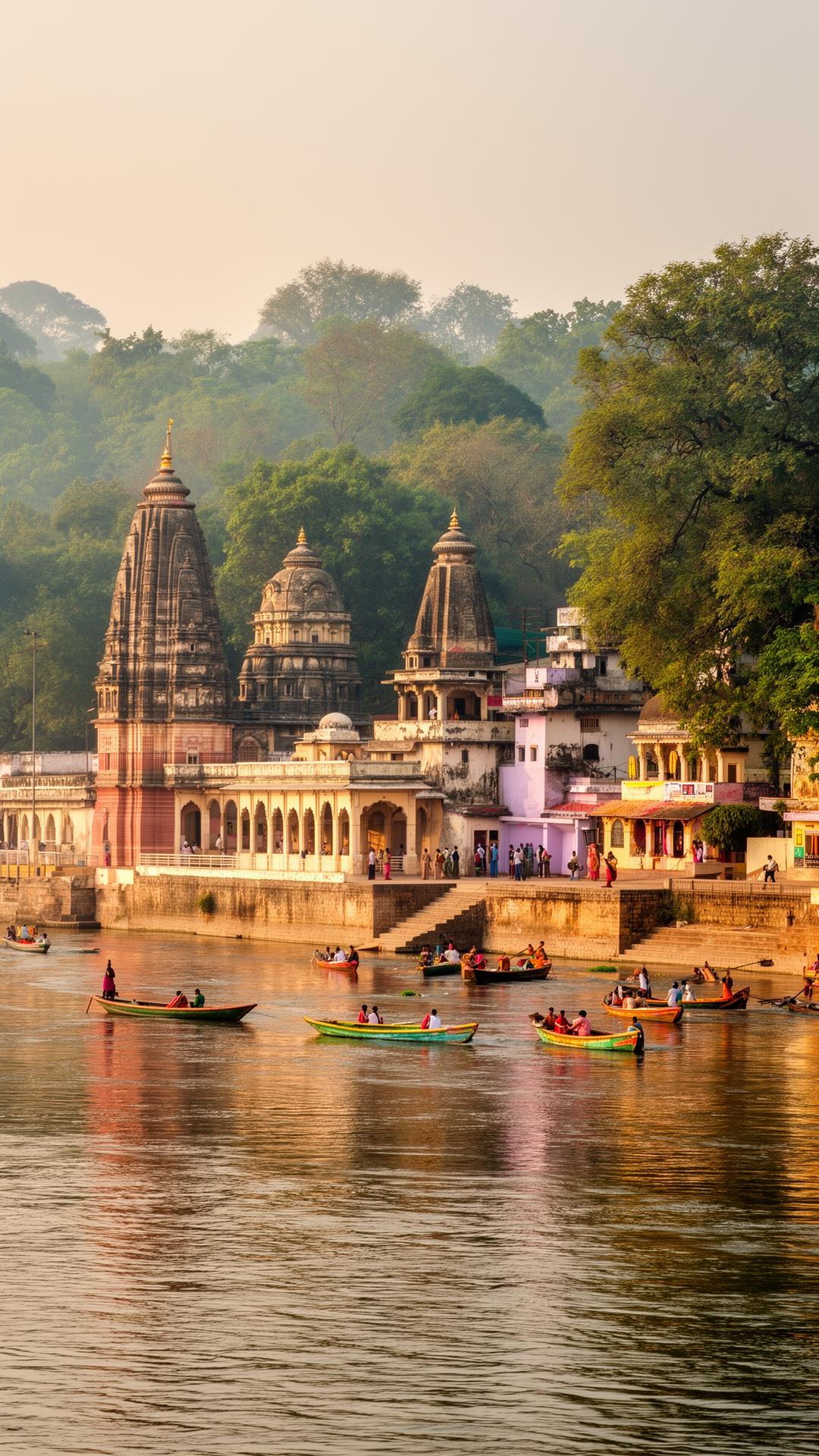
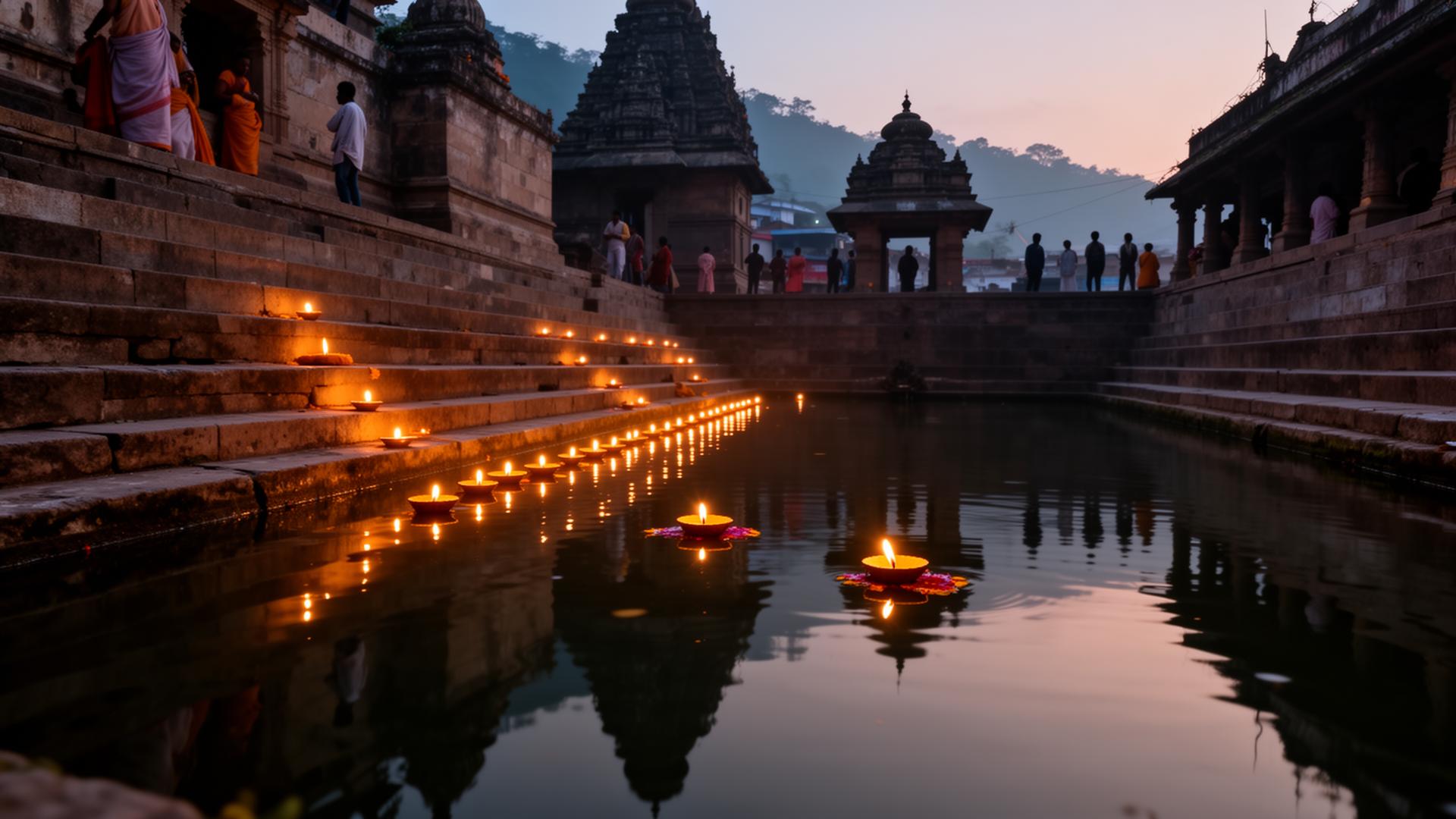
Kushavarta is where the Godavari first becomes visible to pilgrims — a still, stone-stepped tank held to be the truest beginning of the river. During Kumbh, the Shahi Snan procession arrives here, and the water itself carries the weight of every Akhara's prayer.
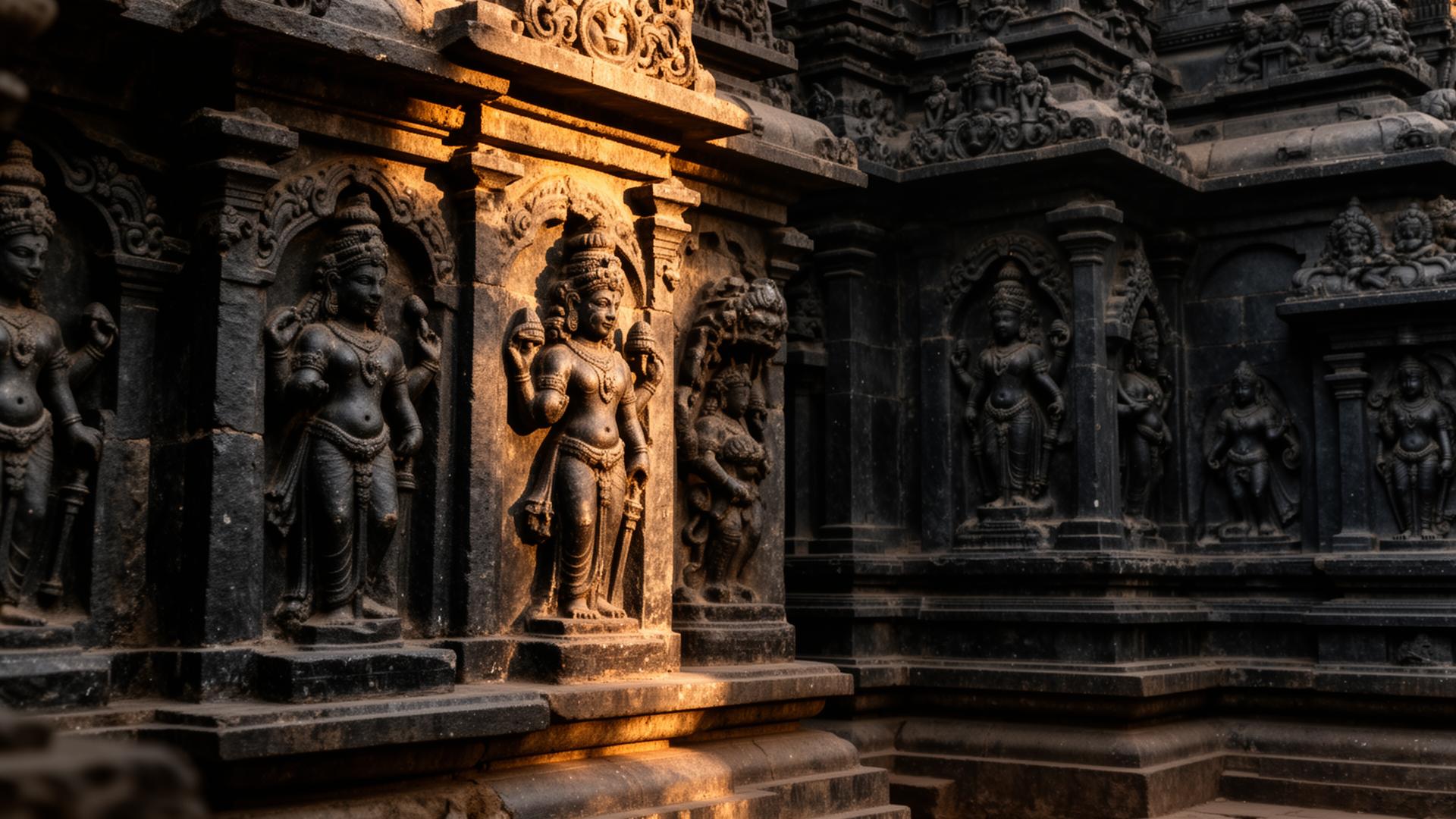
Trimbakeshwar has been worshipped continuously for over two thousand years. Its present form, however, is the gift of the Peshwa era.
The site finds mention in early Puranic texts as the source of the Godavari and seat of Shiva.
Through dynastic change, the lingam at Trimbakeshwar remained an unbroken centre of devotion.
The present black basalt temple was commissioned by the Peshwa, taking decades to complete.
An active pilgrimage centre at the heart of every Nashik Kumbh.
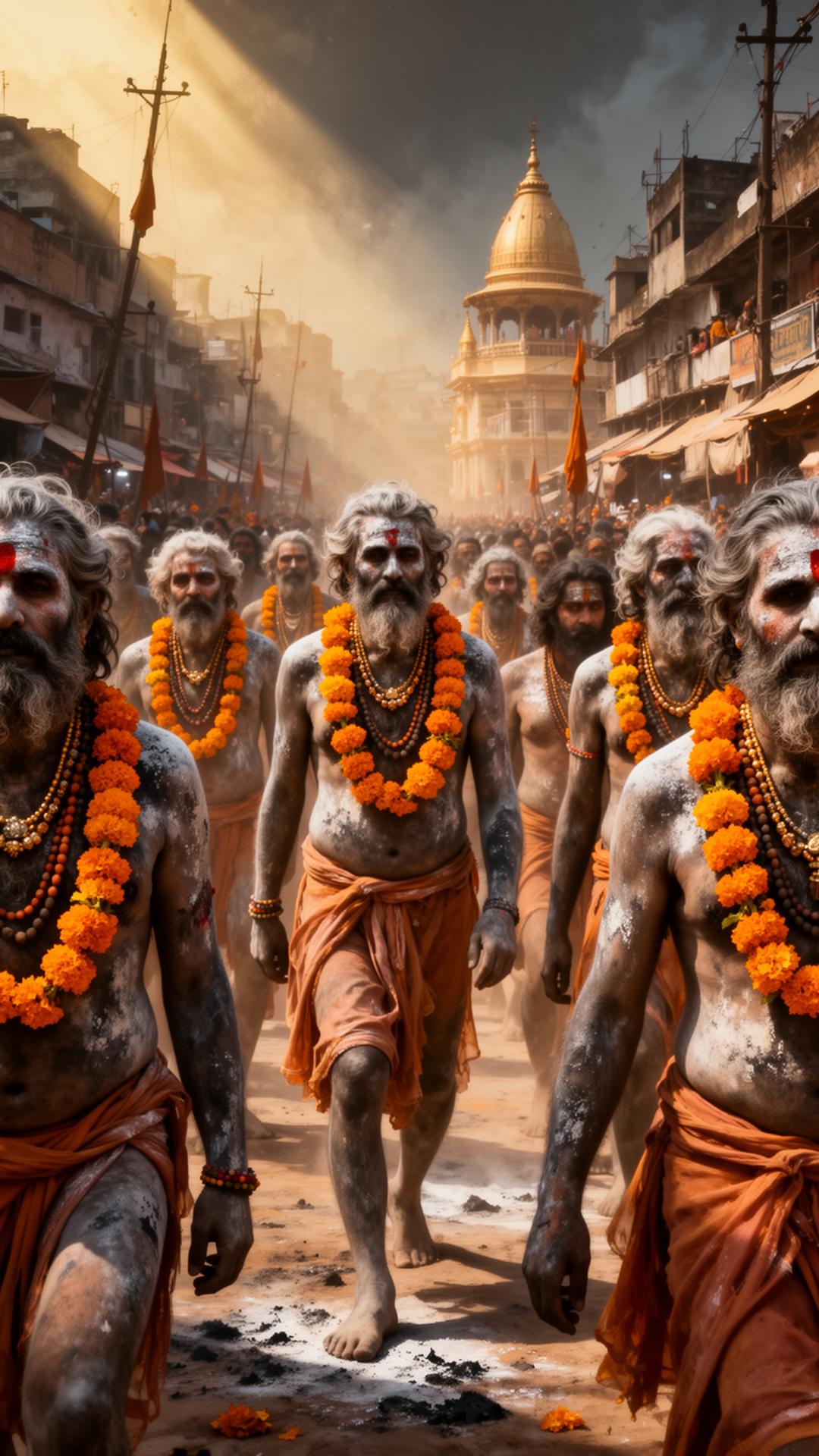
Nashik Kumbh has two sacred axes — Ramkund on the Godavari and Trimbakeshwar at the Jyotirlinga. Each Akhara honours the lingam here before descending to bathe. Without Trimbakeshwar, there is no Nashik Kumbh.
Trimbakeshwar is 28 km west of Nashik city, on a calm road that winds toward the Brahmagiri foothills.
45 minutes by taxi or local bus along the Trimbak Road.
4 hours by car via NH-160, or train to Nashik Road + taxi.
Nashik (ISK) for domestic; Mumbai (BOM) for international visitors.
Pre-paid taxis, shared cabs and tourist coaches operate daily.
English-speaking drivers and curated transfers available on request.
Reach by 5 AM for Kakad Aarti and the most serene experience.
Plan your sacred journey to one of the twelve Jyotirlingas during Nashik Kumbh 2027.